Solar Hot Water Perth: The Complete 2024 Guide
With electricity prices across Western Australia continuing to climb, we’re seeing more Perth homeowners look for ways to cut the cord on expensive grid power. You likely know that our city is one of the sunniest capitals in the world, averaging over 8 hours of sunshine daily. But here’s the insight most people miss: it’s not just about capturing that sun; it’s about how you store it.
From what we see in the field, a correctly sized solar hot water system is essentially a thermal battery. Instead of storing electricity in a lithium unit, you’re storing heat in a water tank. For many families, this single switch can slash water heating bills by 70% to 90%. However, getting those results requires navigating a mix of system types, local rebates, and critical installation details specific to our coastal climate.
We’re going to break down the real costs, the performance data we see on the ground, and the specific setup that works best for Perth’s unique conditions.
Types of Solar Hot Water Systems
Flat Plate Collectors
The traditional design uses flat, dark-coloured panels (usually 2m x 1m) mounted on your roof. This is the “workhorse” of the industry and what you’ll see on thousands of rooftops from Joondalup to Mandurah.
How they work:
- A dark absorber plate inside the panel heats up under the sun.
- Water (or a special heat transfer fluid) circulates through copper pipes attached to the plate.
- This heat is transferred directly to your storage tank.
- The system relies on direct sunlight to reach optimal temperatures.
Pros:
- Proven Durability: We often service flat plate systems that have been running for over 20 years.
- Lower Initial Investment: Generally cheaper than evacuated tube setups.
- Damage Resistance: The toughened glass is incredibly robust against hail and debris.
Cons:
- Winter Efficiency Drop: They struggle more than tubes when the ambient air temperature drops or on cloudy days.
- Roof Real Estate: They require a larger continuous area on your roof compared to compact tube manifolds.
Evacuated Tube Collectors
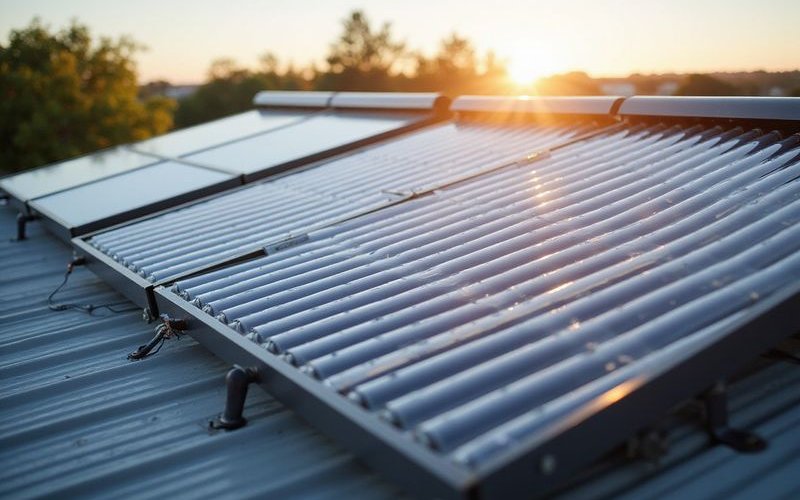
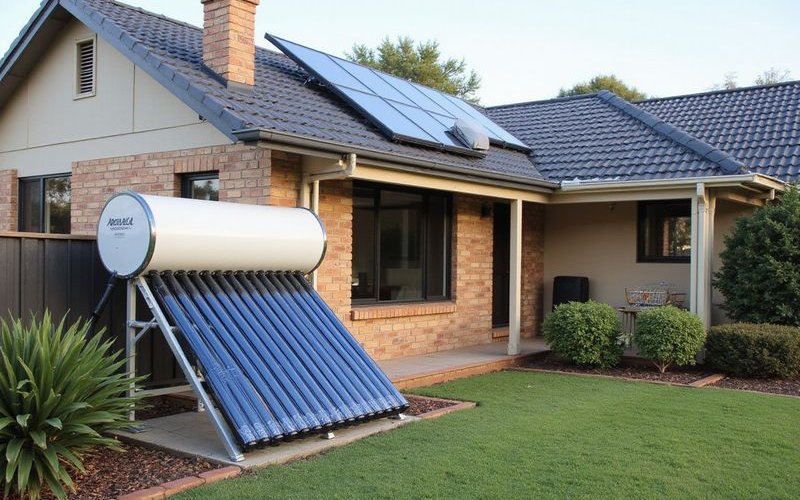
This is a more modern design that looks like a row of glass fluorescent lights on your roof. They use a vacuum layer to insulate the heat, working much like a thermos flask.
How they work:
- Two glass layers create a vacuum that traps heat incredibly well.
- Sunlight boils a liquid inside a copper heat pipe within the tube.
- The vapour rises to the top, transferring heat to the water manifold.
- The vacuum layer prevents heat from escaping back into the cold air.
Pros:
- Superior Cold Weather Performance: The vacuum insulation means they work efficiently even on chilly Perth mornings.
- Passive Tracking: The round tubes catch sunlight from early morning to late afternoon better than flat plates.
- Easy Repairs: If a cricket ball breaks one tube, the system keeps running, and we can replace just that single tube.
Cons:
- Fragility: While strong, the glass tubes are more prone to breakage from physical impact than flat plates.
- Higher Cost: You will typically pay a premium of $500-$1,000 more for a quality tube system.
Split System vs Close-Coupled
Close-Coupled (Roof Mounted):
- The Look: The heavy tank sits right on top of the roof above the collectors.
- The Benefit: Gravity does the work (thermosiphon), so there are no pumps to fail or sensors to calibrate.
- The Drawback: It puts significant weight (300kg+) on your roof structure, which requires a sound structural assessment.
Split System:
- The Look: Only the low-profile collectors are on the roof; the tank sits on the ground like a standard hot water unit.
- The Benefit: It looks much cleaner and places no heavy load on your roof trusses.
- The Drawback: It requires a circulation pump and a controller, which are additional moving parts that will eventually need maintenance.
Solar Hot Water Costs in Perth (2025/2026 Estimates)
Pricing has shifted recently due to changes in manufacturing and labor costs. The figures below are realistic installed prices for Perth in the current market, factoring in the STC (Small-scale Technology Certificate) rebates for Zone 3.
System Prices (Installed)
| System Type | 300L Price Range |
|---|---|
| Flat Plate Close-Coupled | $3,500 - $4,800 |
| Flat Plate Split | $4,200 - $5,800 |
| Evacuated Tube Close-Coupled | $4,800 - $6,000 |
| Evacuated Tube Split | $5,200 - $6,800 |
Note: Prices include the Zone 3 STC financial incentive. “Hidden” costs often include tempering valves ($200+) or switchboard upgrades if your current electrical setup is outdated.
Running Costs Comparison
It is vital to look beyond the sticker price. A cheap electric storage unit costs little to buy but acts as a “silent thief” on your electricity bill.
| System Type | Est. Annual Running Cost | 10-Year Total Cost |
|---|---|---|
| Solar (Electric Boost) | $150 - $350 | ~$5,500 (Buy + Run) |
| Solar (Gas Boost) | $100 - $250 | ~$5,000 (Buy + Run) |
| Heat Pump (Solar Sponge) | $100 - $300 | ~$4,800 (Buy + Run) |
| Electric Storage | $900 - $1,400 | ~$12,500 (Buy + Run) |
Data based on average 4-person household usage in Perth. Electric storage running costs are significantly higher without solar PV.
Installation Requirements
Roof Assessment
Before we install a single bracket, we need to verify your roof can handle the job.
Orientation & Efficiency:
- True North: The gold standard. 100% efficiency.
- North-West: Excellent for Perth homes that shower in the evening, capturing the intense afternoon sun.
- West: Surprisingly effective in Perth summers, losing only about 10-15% total output compared to North.
- South: We generally refuse to install here; the performance drop is too severe.
Structural Integrity:
- Tile Roofs: Most standard tiled roofs in Perth can support a close-coupled system, but we check for cracked tiles and rafter spacing.
- Metal/Colorbond: Easiest to install on, but we must use specific mounting rails to prevent galvanic corrosion between dissimilar metals.
- Pitch: A pitch of 20° to 30° is ideal. Flat roofs require a tilt frame, which adds wind loading and cost.
Hot Water Usage Patterns
Your lifestyle dictates the right system. Solar hot water thrives when you work with the sun.
- The “Solar Sponge” Strategy: If you have an electric booster or a heat pump, set your timer to run between 9:00 AM and 3:00 PM. This utilizes the “Solar Sponge” tariff or your own rooftop solar power.
- Morning vs. Evening: If you shower in the morning, you are using water heated yesterday. A larger tank (300L+) is crucial here to ensure the water stays hot overnight.
Boosting Options
Even in sunny WA, you will need a backup for those grey winter weeks.
Electric Boosting:
- Inside the tank is an element (like a giant kettle).
- Pro: Cheap to install and maintain.
- Con: Expensive to run if it kicks in during peak evening rates (4pm-9pm).
- Tip: Install a timer so it only boosts mid-day or overnight.
Gas Boosting:
- Usually an inline continuous flow unit.
- Pro: Only burns gas when you actually turn the tap on and the solar water isn’t hot enough. High efficiency.
- Con: You are still tied to a gas supply charge, which is becoming less popular as homes go all-electric.
Performance in Perth
Solar Contribution by Season
Perth is unique because our winters are mild but can be partly cloudy. Here is what real-world performance looks like:
| Season | Solar Contribution | Boosting Behavior |
|---|---|---|
| Summer | 95-100% | Booster almost never turns on. |
| Autumn | 75-90% | Booster helps on the odd rainy day. |
| Winter | 50-65% | Booster runs daily to top up temperature. |
| Spring | 80-95% | Solar does the heavy lifting again. |
| Annual Avg | ~80% | Significant savings year-round. |
The Heat Pump Competitor
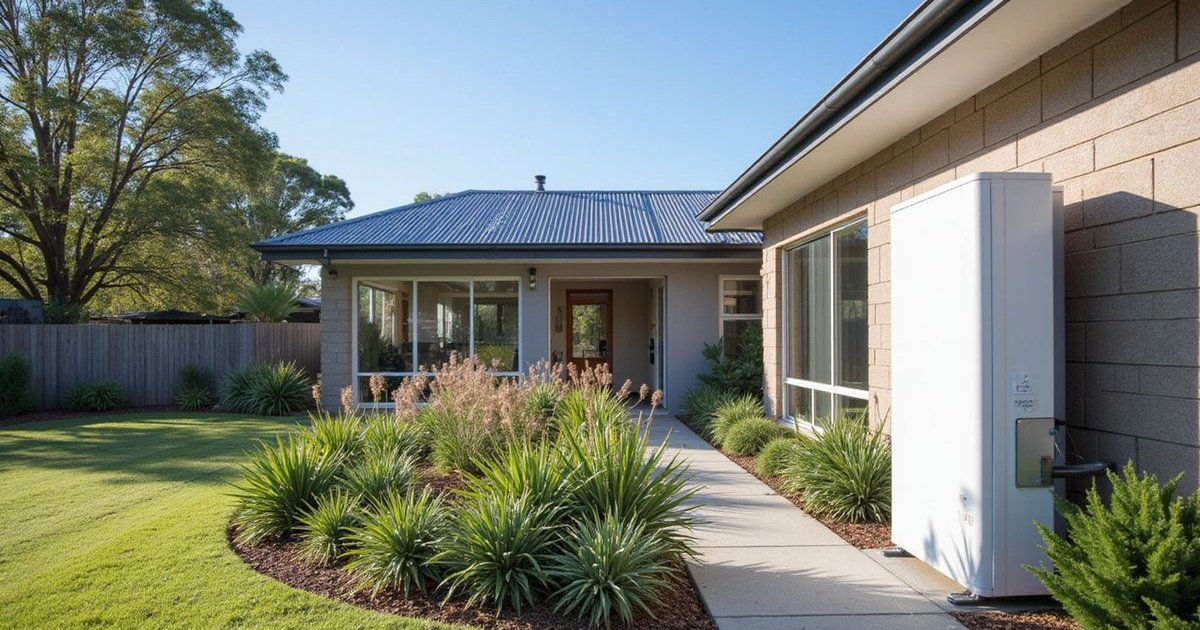
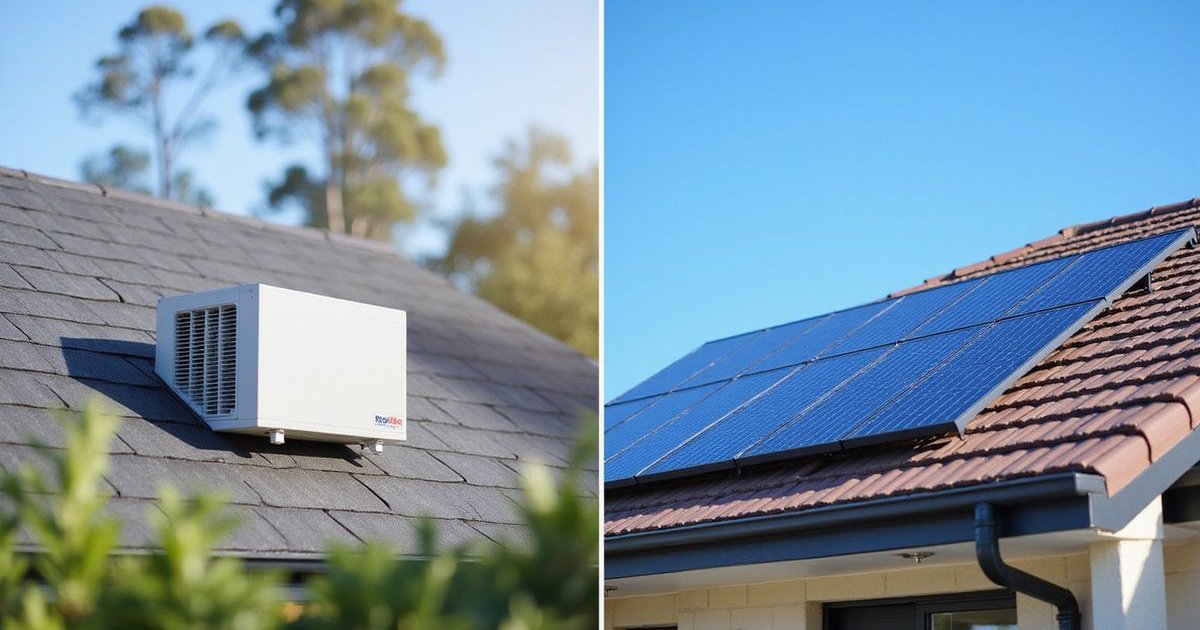
An increasingly popular alternative is the Heat Pump. It doesn’t use roof panels but works like a “reverse fridge” to extract heat from the air.
Solar Hot Water vs. Heat Pump: The Verdict
| Feature | Solar Hot Water | Heat Pump |
|---|---|---|
| Lifespan | Longer (15-20+ years) | Medium (10-15 years) |
| Maintenance | Low (Clean panels, check valve) | Medium (Clean filters, check fan) |
| Noise | Silent | Low hum (like an A/C unit) |
| Cloudy Performance | Drops significantly | Excellent (Works day/night) |
| Best For | North-facing roofs, families | Shaded roofs, solar PV owners |
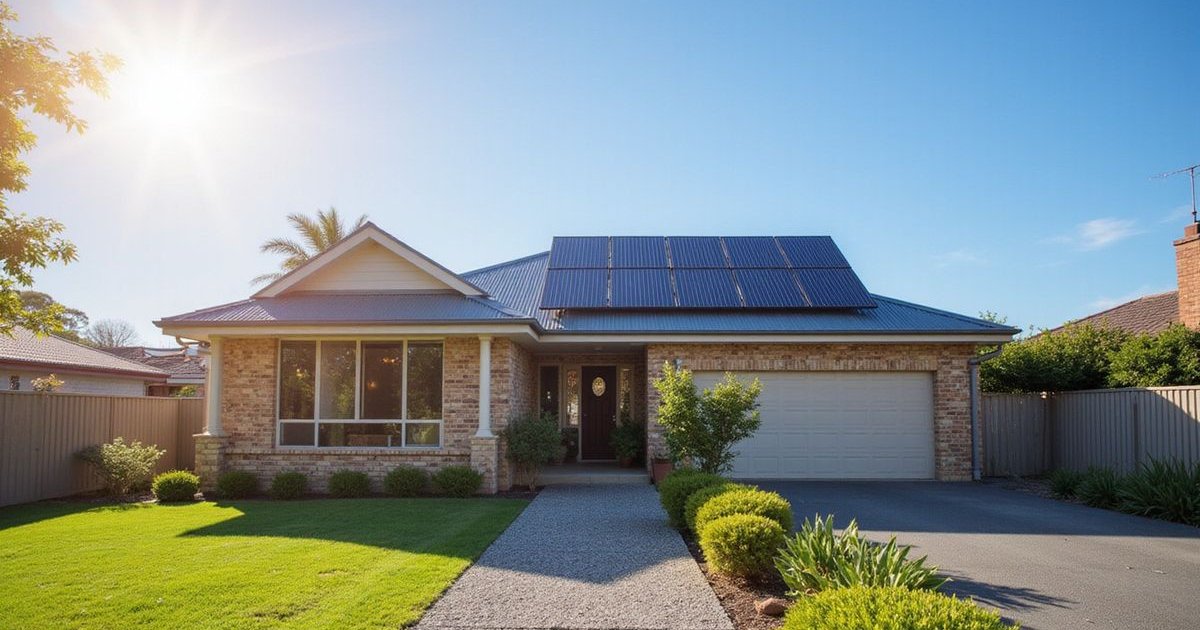
Our Advice: If you have a great north-facing roof and no solar panels, dedicated Solar Hot Water is unbeatable for longevity. If you have a massive solar PV system on your roof already, a Heat Pump is often the smarter financial choice as it acts like a “battery” for your excess solar power.
Maintenance Requirements
You wouldn’t drive a car for 10 years without a service, and your hot water system is no different.
The “Hard Water” Factor
This is a critical Perth-specific tip. Areas like the northern coastal corridor (e.g., Alkimos, Yanchep) often have harder water.
- Standard Anodes: Magnesium anodes can dissolve too quickly in hard water.
- The Fix: If you live in a hard water zone, request an Aluminium Anode. It protects your tank longer and prevents that “rotten egg” gas smell.
Recommended Schedule
- Every 6 Months: Snap the relief valve lever (PTR valve) gently to ensure it isn’t stuck.
- Every 3-5 Years: Professional service. We check the glycol fluid levels (for closed-loop systems), clean the collectors, and most importantly, replace the sacrificial anode.
- The Anode Warning: Once your anode is depleted, your tank will start rusting from the inside out. A $250 anode replacement is much cheaper than a $4,000 new system.
Is Solar Hot Water Right for You?
Ideal Candidates
- Roof Space: You have unshaded space facing North or North-West.
- Family Size: Households of 3+ people see the fastest return on investment (ROI).
- Long-Term Owners: You plan to stay in the home for at least 5 years to reap the savings.
When to Consider Alternatives
- Heavy Shade: Big gum trees blocking your roof? Go for a Heat Pump.
- Small Usage: Single-person households might find the upfront cost takes too long to pay back.
- Roof Aesthetics: If you absolutely hate the look of panels, a ground-mounted Heat Pump is invisible from the street.
Getting Started
Choosing between a split system, a roof-mounted unit, or switching to a heat pump depends entirely on your specific property layout and water usage.
Contact us for a free site assessment. We will evaluate your:
- Roof orientation and structural rating.
- Water hardness levels in your suburb.
- Current electrical setup and solar PV availability.
- Budget and long-term savings goals.
From there, we’ll recommend the solution that puts the most money back in your pocket.
Call 08 7666 2806 or request a quote online.