Perth homeowners frequently ask us whether they should stick with traditional systems or make the switch to renewable hot water. It is a valid question, especially with the state’s push towards electrification and the phasing out of gas in new developments.
Our team has seen the market shift dramatically in the last two years as technology improves and electricity tariffs change. Making the wrong choice can leave you with a system that is expensive to run or unsuitable for your property’s layout. We want to help you cut through the marketing noise and look at the hard data.
This comparison breaks down exactly how these two systems stack up in Perth’s unique climate so you can make a confident decision.
How They Work
Heat Pumps (The “Thermal Battery”)
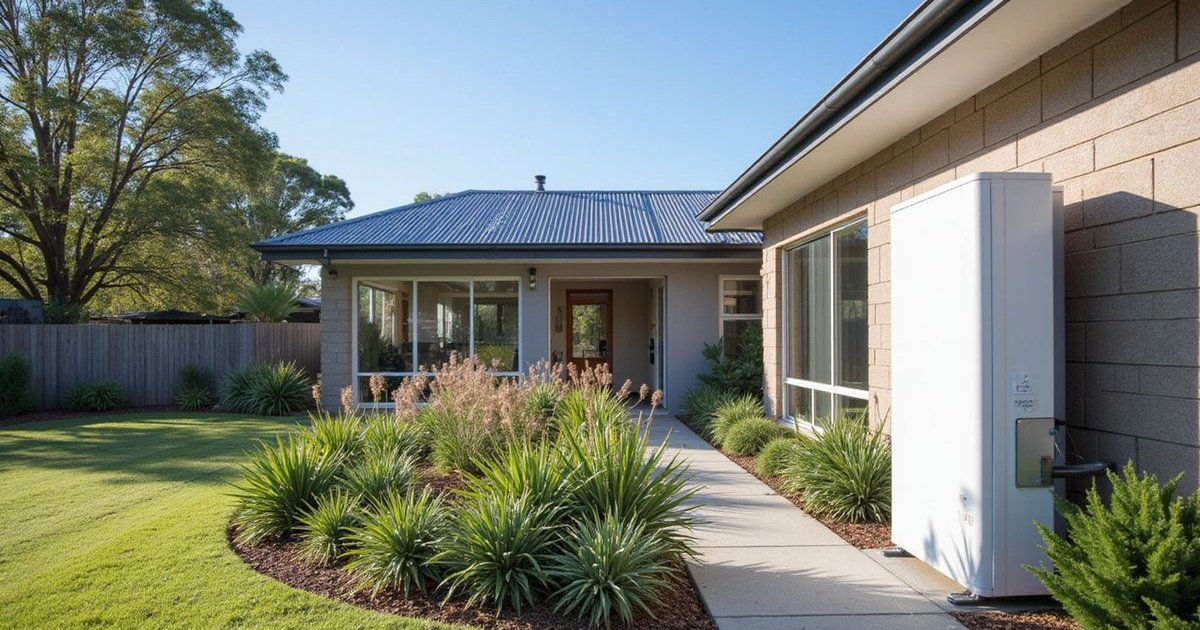
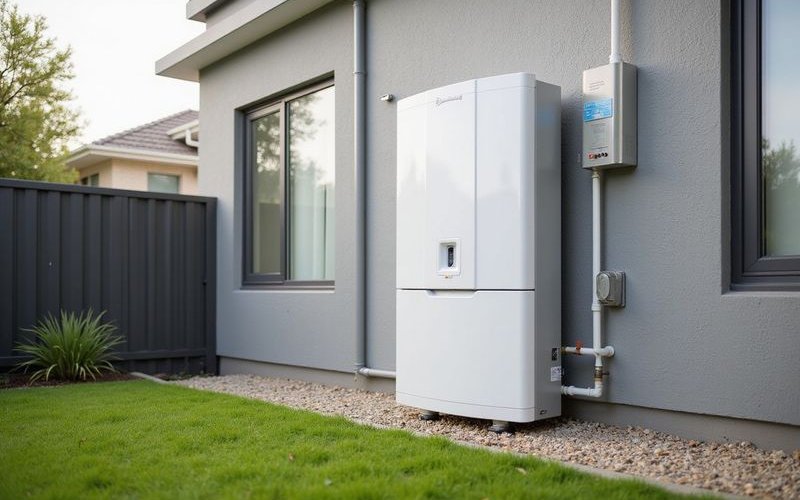
Heat pump hot water systems operate using the same technology as your refrigerator, but in reverse. Instead of pushing heat out to keep the inside cool, they extract warmth from the outside air and transfer it into the water tank. Our technicians often explain it to customers as a “thermal battery” because it allows you to store cheap daytime electricity as hot water for use later at night.
Key characteristics:
- Efficiency: Consumes 1kW of electricity to generate 3kW to 4kW of heat energy (referred to as a COP of 3.0 to 4.0).
- Ambient Performance: Works effectively even when the outside temperature drops to 5°C, covering Perth’s coldest winter mornings.
- Smart Timing: Modern units like the iStore or Rheem Ambiheat can be programmed to run strictly during the day.
- Refrigerants: Newer models use eco-friendly refrigerants like R290 (Propane) or CO2, which have minimal impact on the ozone layer.
Solar Hot Water (The Traditional Choice)
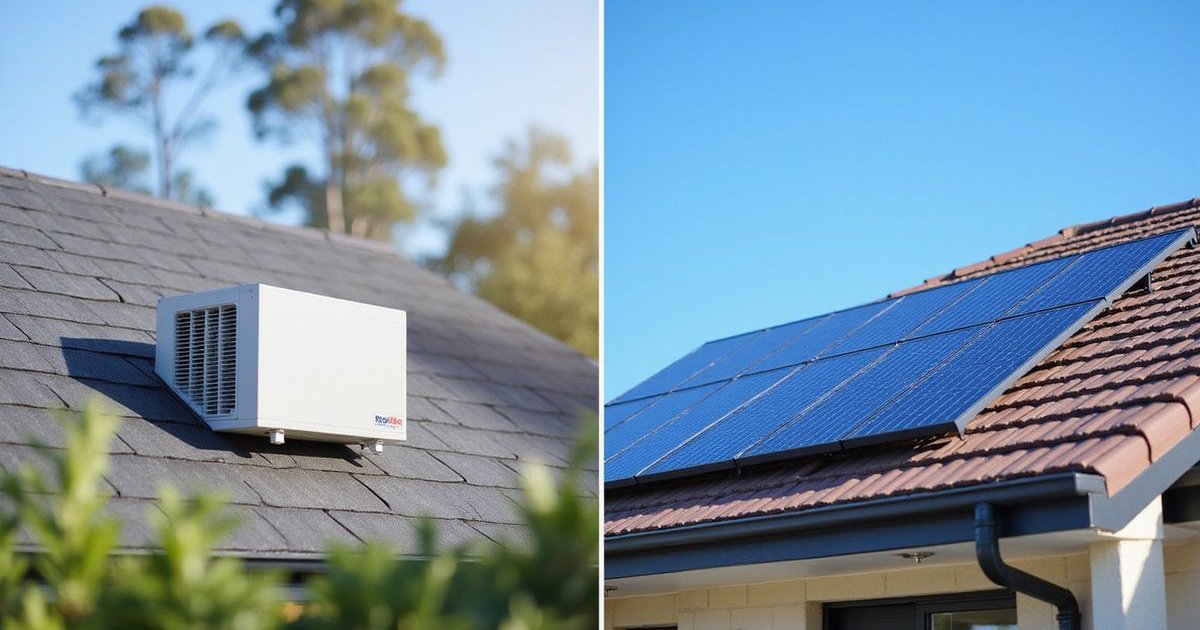
Solar hot water systems use roof-mounted collectors to capture heat directly from sunlight. Fluid circulates through these panels, heats up, and transfers that energy to water stored in a tank. We find that while these systems are legendary for their lifespan, they are becoming less common in modern installs due to the complexity of plumbing on the roof.
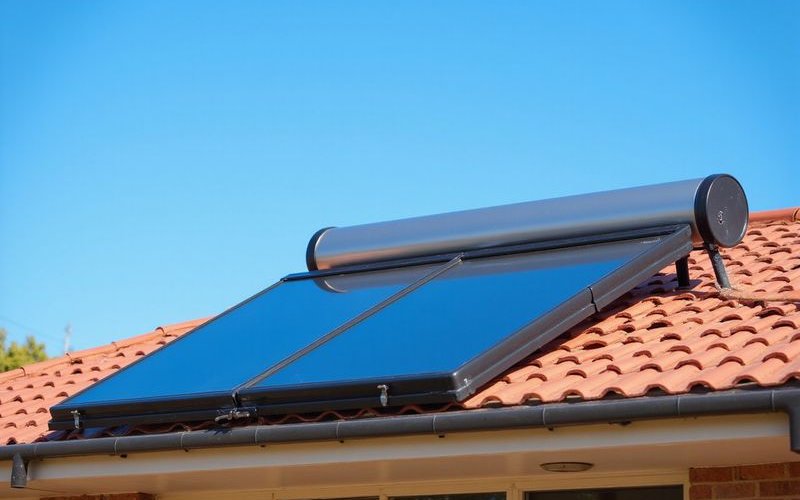
Key characteristics:
- Direct Solar: Uses UV radiation to heat water directly, requiring zero electricity during peak sun hours.
- Boosting Required: An electric or gas booster must kick in during overcast days or heavy usage periods.
- Roof Load: A roof-mounted tank system (thermosiphon) can weigh over 300kg when full, requiring structurally sound timber trusses.
- Simplicity: Split systems place the tank on the ground and panels on the roof to reduce weight and improve aesthetics.
Head-to-Head Comparison
Upfront Cost and Rebates
Our quotes for 2026 installations reflect the slowly decreasing value of federal incentives. The Small-scale Technology Certificates (STCs) scheme acts as an upfront discount, but the “deeming period” reduces every year until the scheme ends in 2030.
| System Type | Typical Installed Cost (After Zone 3 STC Rebate) |
|---|---|
| Heat Pump (Integrated 270L-315L) | $3,000 - $4,800 |
| Solar Flat Plate (Roof Tank) | $3,800 - $5,400 |
| Solar Split System (Ground Tank) | $4,500 - $6,500 |
Winner: Heat Pump. Labor costs for roof plumbing drive up the price of traditional solar. Heat pumps are generally plug-and-play replacements for existing electric storage units.
Running Costs (The Synergy Midday Saver Factor)
This is where the math has changed significantly for Perth residents. Synergy’s “Midday Saver” tariff offers a Super Off-Peak rate of approximately 8.4 cents per kWh between 9 AM and 3 PM. We advise all our heat pump customers to switch to this tariff and set their unit’s timer to run exclusively during this window.
| Scenario | Estimated Annual Running Cost |
|---|---|
| Heat Pump (on Midday Saver) | $100 - $180 |
| Solar Thermal (Electric Boost) | $170 - $350 |
| Standard Electric Storage | $1,200+ |
Winner: Heat Pump. While solar thermal is efficient, the electric booster often engages in the evening when rates are highest (Peak 3 PM - 9 PM is ~53 cents/kWh). A programmed heat pump guarantees you only pay the lowest possible rate.
Installation Requirements & Noise
Heat Pump:
- Location: Requires a well-ventilated spot on the ground, similar to an air conditioner compressor.
- Noise: This is the biggest complaint we hear. Standard units run at 48dB to 55dB. You must not install them directly outside a bedroom window.
- Electrical: often requires a dedicated circuit, which may add a small cost if your switchboard is outdated.
Solar:
- Orientation: Strictly requires a North, North-West, or North-East facing roof section for optimal efficiency.
- Shading: Even a small amount of shade from a neighbor’s second story or a gum tree can drastically reduce performance.
- Roof Integrity: older homes in suburbs like Fremantle or Cottesloe with brittle clay tiles may need roof restoration before bearing the weight of a 300kg tank.
Winner: Heat Pump. It offers far more flexibility as it does not rely on roof orientation or structural integrity.
Performance in Perth
Perth’s climate is characterized by hot, dry summers and mild, wet winters.
Heat Pump in Perth:
- Consistent Output: The ambient air temperature in Perth rarely drops below freezing, meaning heat pumps operate at high efficiency (COP 3+) year-round.
- Recovery Rate: A good unit can heat its entire tank volume in 3-4 hours, ensuring you don’t run out of water during the evening rush.
Solar in Perth:
- Summer Overload: On 40°C days, roof units can overheat, causing the pressure relief valve to dump hot water to prevent damage.
- Winter Slump: During a week of heavy rain in July, the system relies almost entirely on the electric booster, acting just like a standard electric water heater.
Winner: Tie. Both systems work exceptionally well here, but the heat pump is more predictable in winter.
Maintenance and Longevity
Heat Pump:
- Filter Cleaning: The air intake filter needs a quick brush off every 6 months to maintain airflow.
- Anode Replacement: Like all enamel tanks, the sacrificial anode must be checked every 3-5 years to prevent rust.
- Lifespan: typically 10-12 years for the compressor.
Solar:
- Collector Care: Panels should be cleaned of dust and bird droppings annually to maintain efficiency.
- Plumbing: Roof-mounted valves can leak over time, and spotting a leak on the roof is often difficult until it is too late.
- Lifespan: Panels can last 20+ years, but the tank and valves usually need attention sooner.
Winner: Heat Pump. Ground-level maintenance is safer and cheaper than paying a plumber to harness up and climb onto your roof.
Space and Aesthetics
Heat Pump:
- Footprint: Looks like a standard hot water tank with a fan unit on top or beside it.
- Hidden: easy to tuck down the side of the house (“the blind side”) behind a gate.
Solar:
- Visibility: You will have panels and potentially a large tank visible on your roofline.
- Integration: Can look cluttered if you also have Solar PV panels fighting for the same north-facing roof space.
Winner: Personal preference.
When to Choose Heat Pump
A heat pump is likely the smarter financial move if:
- ✅ You are on the Synergy Midday Saver: You can heat your water for roughly 8 cents per kWh.
- ✅ You have Solar PV: It acts as a “sponge” to soak up your excess solar power generation.
- ✅ Roof space is limited: You want to save your north-facing roof for electricity-generating solar panels.
- ✅ Budget is key: You want the lowest upfront cost after the STC rebate is applied.
- ✅ Shading is an issue: Your property is surrounded by trees or double-story neighbors.
When to Choose Solar Thermal
Traditional solar is likely better if:
- ✅ You have huge roof space: You have plenty of room for both thermal collectors and PV panels.
- ✅ Noise is a dealbreaker: You need absolute silence (solar thermal is silent; heat pumps hum).
- ✅ Longevity is the priority: You are willing to pay more upfront for panels that could last 20 years.
- ✅ Off-Grid: You are in a semi-rural area where electricity supply is unreliable or limited.
The Verdict for Perth
Both systems are massive upgrades over old gas or resistive electric units.
For most Perth homeowners: We recommend a high-quality Heat Pump (like an iStore or Rheem). The combination of lower installation costs, the ability to leverage the Midday Saver tariff, and the preservation of roof space for Solar PV makes it the logical modern choice.
For specific scenarios: Solar Thermal remains a strong contender for homes with ample roof space and zero tolerance for compressor noise.
Can’t Decide?
The best approach is a site assessment where a professional evaluates your switchboard, roof orientation, and family size. We look at factors like shading from nearby trees and your current electricity tariff to calculate your real-world ROI.
Contact us for a free assessment. You will get a clear, data-backed recommendation on whether a heat pump or solar system will save you the most money over the next decade.